Ten Emerging Markets as Big as the Internet

by Mike Chalmers Mike Chalmers No Comments

You may have already thought to yourself, “Every day I am seeing new inventions and technologies that blow my mind. What is going on?” If you’re an entrepreneur you’re probably also wondering how to develop the most profitable business in this seemingly frenetic—i.e. all over the place—market.

Setting the Scene

Elon’s going to Mars, Bitcoin’s a multi-billion dollar currency, lifelike robots are rising, virtual worlds are blurring the lines of reality, and artificial intelligence is advancing so quickly that futurists are talking even more fervently about “the singularity” (the point at which technological advances push artificial learning to a level reaching—then surpassing—human intelligence).

Finding Focus

Once you distinguish between the various emerging markets, you’ll have a better idea of how to lock down your own niche and remain focused. The last thing you need is to see every trend and jump on it, or even be distracted by it. Focus is key. So let’s look at the environment, beginning with some history.

First, a note on the above multidirectional, leapfrogging progress being made. None of these are fads. They are all long dreamed about markets that have massive inertia. Your challenge is not to choose one or two that will outlast the others, but rather, to invest in those with the best fit for you and your teams. These will all get bigger. Much bigger.

Online Was Just the Beginning

When Swivel first launched services in the 1990s, we focused an inordinate amount of our marketing efforts on convincing customers they needed something called a “website.” That might sound laughable today, but it’s instructive for these emerging markets.

You probably don’t know a business that’s entirely offline. Online everything blew up in a big way. The rest is history. But it was just the start.

We knew that every company would soon need a way to be online or be left behind. Your job today is to determine what your customers will need or want in the years ahead. But you’ll need to see it now, before the wave crests. Otherwise, the value you provide will be limited.

Online Went Big as a Horizontal Market

What made the web so monolithic? The Internet opened up what we called a horizontal market—horizontal because it served more than one niche or industry. Over time online technologies laid the foundation for innumerable vertical markets—more narrowly focused spaces (e.g. news outlets, e-commerce stores, file and video sharing, marketing services, search, ad agencies, consultancies, nonprofits, crowdfunding, etc.).

Some of those industries didn’t even exist in the early 90s. Now they had a global platform to generate revenues for viable businesses.

Ten Enormous Horizontal Markets

Today, a similar though perhaps even more stunning convergence is happening. Just as the Internet opened up a horizontal market enabling millions of users to buy, sell, and interact in new ways, at least 10 emerging horizontal markets are providing new opportunities for an almost unlimited number of people. Most of these are launching innovations only dreamed of in science-fiction plot lines.

The following list of each horizontal market along with potential vertical applications is not exhaustive. There are others still, but these ones are worth watching and evaluating for industry analysis. Subsequent articles will break down each of these in more detail.

Snapshot

  1. Virtual Reality (VR) and Augmented Reality (AR)
  2. Robots and Robotics
  3. Artificial Intelligence, Machine Learning, and Big Data
  4. Financial Tech (Fintech) and Security Tech (Securetech)
  5. Medical Tech (Medtech) and Biological Tech (Biotech)
  6. Commercial Space Exploration Tech and Services
  7. Autonomous Vehicles
  8. Green Tech, Clean Energy, and Agritech
  9. Cloud Technologies and the Internet of Things (IoT)
  10. Enegotiation

Expanded List

Horizontal #1: Virtual Reality (VR) and Augmented Reality (AR)

The immersive nature of VR and AR has content producers and tech manufacturers sprinting to develop new experiences. Our post on VR and AR explains why this previously failed tech has rebounded and appears to be here to stay.

VR SwivelBlog

Virtual worlds are opening up via numerous products and brands.

Vertical Applications

  •    Video Games
  •    Immersive Films
  •    Medical Services (even surgery—see Horizontal #5)
  •    Virtual Presence (immersive video communications)
  •    Wearable Devices
  •    Mobile Tech
Horizontal #2: Robots and Robotics

Headlines and news ledes are filled with details of the competitive landscape of robotics. From competitions to meet-ups, the rise of humanoid robots as well as machine replacements for human jobs beyond the factory is an important development.

Our post on Robots highlights current victories and opportunities.

Vertical Applications

  •    Manufacturing
  •    Personal Assistants
  •    Labor Replacement
  •    Artificial Limbs/Prosthetics
Horizontal #3: Artificial Intelligence, Machine Learning and Big Data

While each of these are significant in their own right, we’ve grouped them together because they are collectively about (a) input, (c) analysis, (d) learning, (e) iteration, and (f) control/autonomy (output).

Machine Learning SwivelBlog

If the singularity occurs, the lines between authentic and synthetic intelligence will be blurred.

Ultimately these are about intelligence, whether for autonomous application or human intellectual augmentation. Big data was hailed as important in its own right but experts have realized the need for algorithms and processes to make it useful.

Our subsequent article will explain the significance and importance, along with pitfalls of the tech.

Vertical (and Horizontal) Applications

  •    Autonomous Coding
  •    Robots (See Horizontal #2, above)
  •    Public-Private Project Planning and Budgeting
  •    Internet Packet Routing
  •    Security and Counter-Terrorism (#4, below)
  •    Autonomous Vehicles (#7, below)
  •    Financial Investing and Stock Prediction
  •    Climate Modeling
Horizontal #4: Financial Tech (Fintech) and Security Tech (Securetech)

Due to the wealth involved in fintech and the disproportionate spending on security by both it and government, we discuss these as linked in this market. They could be viewed separately. However, significant overlaps aid in analysis.

Counterterrorism SwivelBlog

Government spending on cybersecurity and counterterrorism will continue to grow as threats increase.

Banks and exchanges along with government agencies develop important technologies that spill over into general public use cases. Our post on fintech and securetech will highlight opportunities in the marketplace as well as vulnerabilities and ways to guard against theft or fraud in your business.

Vertical Applications

  •    Cryptocurrencies (Bitcoin, Ethereum, Ripple)
  •    Payment Platforms (iTunes, GooglePlay, PayPal, Stripe)
  •    Personal and Enterprise Surveillance Tech
  •    Fraud Prevention
  •    Counter-Terrorism
Horizontal #5: Medical Tech (Medtech) and Biological Tech (Biotech)

Medical technologies are beginning to provide benefits to elderly and disabled groups that were unheard of a decade ago. From something as simple as improvements in crutches, to remote operated surgery, developments are surreal. Further, in biotech there is much to see.

Biotech SwivelBlog

From gene editing to bionic limbs, biotech and medtech are booming.

Plenty of opportunity exists but there are significant debates as well, over ethics and best practices. This is especially true with new innovations like the ability to edit genetic material with CRISPR. Our subsequent post on medtech and biotech will detail the ups and downs, as well as some significant opportunities.

Vertical Applications

  •    Remote Medical Assistance
  •    Needle-less vaccinations and other pain-reducing improvements
  •    Personal Medical Advances (home defibrillator, realtime health monitoring, etc.)
  •    CRISPR and similar technologies
Horizontal #6: Commercial Space Exploration Tech and Services

The space race has begun again. This time however, it’s not between the USA and the former USSR, but rather between private citizens and their public companies. Jeff Bezos, Elon Musk, and Sir Richard Branson are among the most prominent advocates pushing ahead to a new era of space exploration.

Unlike previous government-led exploration, the competition now underway commercially and privately promises to springboard this sector far beyond the stalled progress of the past. A forthcoming post on space will outline exactly what is being planned and evaluate what it means for businesses and enthusiasts alike.

Vertical Applications

  •    Freight Services
  •    Research & Development
  •    Future Travel Services (the Moon, Mars, Orbiting space stations/hotels)
  •    Satellite Connectivity (beyond earth)
  •    Laser-Based Telecommunications Between Planets, Moons, and Orbiting Objects
Horizontal #7: Autonomous Vehicles

The conversation around autonomous vehicles arose before electric cars were fully embraced publicly. But the innovators pushing the envelope on cleaner, more high-tech rides knew early on that the same vehicles were ideal for automation.

Now automakers like Tesla and ride share companies like Uber are making plans for self-driving technology for the masses. Our upcoming article will take a look at how far this industry has to go before it’s mainstream, and how far the innovators plan to take it.

Autonomous Driving SwivelBlog

Autonomous vehicles will soon be seen by land, sea, and air.

Vertical Applications

  •    Cars
  •    Trucks
  •    Buses
  •    Flying cars
  •    Drones
  •    Newly envisioned highways (e.g. the Boring Co’s planned underground networks)
Horizontal #8: Green Tech, Clean Energy, and Agritech

Green technologies like hydro- and wind-power have been around for a long time but these, along with solar solutions, geothermal tech and everything in-between continues to broaden this market and its applications. Additionally, agricultural technologies from drip irrigation to hydroponics, and amazing water filtering innovations likewise spell opportunity in every direction.

Cleantech SwivelBlog

Clean technologies have been in the works for generations but have finally hit their stride.

While the US may have pulled out of the Paris climate agreement, businesses and billionaires around the world continue to move ahead in these areas. We’ll provide detail soon on progress and current predictions as to how rapidly clean services are overtaking incumbent technologies.

Vertical Applications

  •    Water Reuse and Reclamation
  •    Electric Power Generation and Storage (Solar, Hydro, Wind, Batteries)
  •    Hydroponics and Desert Irrigation
Horizontal #9: Cloud Technologies and the Internet of Things (IoT)

Online continues to be massive, and to have significant opportunities for all business types. Further, the expansion of cloud and virtualization technologies to IoT products and applications means the largest interconnected network on earth is only going to get bigger.

Beyond connected refrigerators, the IoT extends to wearables, drones, home automation devices and more. As space exploration opens up further (Horizontal #6 above), cloud and IoT technologies will even extend to the outer limits of our solar system.

IoT SwivelBlog

Connected devices, home automation, inventory tracking are all getting upgrades.

Our article on Cloud and IoT will review progress over the past 10 years, and list opportunities currently available as new verticals open up.

Vertical Applications

  •    Apps and App Platforms
  •    Entertainment Streaming (Netflix, Hulu, YouTube, radio, podcasts)
  •    Online Gaming
  •    Next Generation Social and Communications Media
  •    More Innovative Websites and Apps
  •    Connected Home (appliances, security, climate control, devices)

Horizontal #10: Enegotiation

The final horizontal vertical in this list is the only one that has not yet reached critical mass. This also makes it one of the most exciting. As an industry it is underdeveloped and still building its case to utilize the tech in everyday negotiations.

Enegotiation SwivelBlog

Enegotiation is set to disrupt several industries.

We’ll define it and provide some of the theory behind it in our tenth forthcoming post in this series. It’s in a similar place and time that EVs were at 15 years ago. But it’s one to watch as it will disrupt the following processes:

Vertical Applications

  •    Mergers and Acquisitions
  •    Real Estate Negotiations
  •    Labor Contracts
  •    Collective Bargaining
  •    Buy and Sell Marketplaces and Bidding
  •    Dispute Resolution
  •    International Resource Negotiation (e.g. global water supplies)
  •    Public-Private Projects
  •    and several others…

Common Threads

Each of these horizontals have features in common which enable leaders to invest in core competencies without putting everything into one opportunity.

As high-tech fields, all of these will continue to involve programming and development skills, statistical/analytical abilities, marketing genius, and the software and hardware necessary to create viable products and components.

Further, all of these industries are hot (or in the case of enegotiation, getting hot), meaning that investment capital is available. See this recent discussion on capital availability for robotics as an example.

Zoom Out and Gain Perspective

By looking at each of these 10 horizontal markets from a 30,000-foot vantage point (rather than from your twitter feed) you will more clearly understand the bigger picture. You’ll see which trends connect to a given vertical, and which verticals are part of a broader horizontal market.

Ask the Right Questions

With greater clarity, you can answer several questions to get you started:

  1. What market do you want to enter (based on your talents and resources)?
  2. What are the barriers to entry?
  3. What is the size of the market?
  4. What size of market share could you own?
  5. What are the market’s demographics?
  6. Is there available capital and where is it found?
  7. Who are the major competitors/contributors?
  8. Who are your potential partners?
  9. Who are your potential employees and what skills and resources will they need?
  10. What niche opportunities are available?
  11. What needs are currently unmet?

Build A Solid Business

Whatever market you’re in, or hope to enter, remember to build value for your customers. Some of these markets have astronomical opportunities (literally), but it’s never a good play to build a company just for the opportunity. Build a company that solves real problems and provides serious opportunities for your customers in the process.

Build trust wherever and however you can, as that is one of the rarest commodities in any market. Establish good rapport with those you serve and you can enjoy growth in any market, new or old, vertical or horizontal.

Keurig vs. Verismo vs. Nespresso

by Mike Chalmers Mike Chalmers No Comments

Which single-serve coffeemaker is right for your office? It helps first to understand the function of coffee in the workplace and then weigh the pros and cons of the major systems. While more than three options exist, today we’ll focus here on Keurig, Verismo, and Nespresso systems.

The intent of this article is less about which one of these three stands taller than the rest in a lineup, and more about which is best for your workspace. With a 36.5 percent share of the total US distribution of coffee in 2017, single serve coffeemakers are no doubt on your list of options for at least some of your teams.

The Three Contestants

To solidify these choices in your mind for what they represent, we’ll call them by fuller names:

  1. Keurig the Incumbent;
  2. Verismo the Contender; and
  3. Nespresso the Swiss “Italian Job” (its Swiss origins and Italian flare strongly factor)

Keurig by Keurig Green Mountain with K-Cups (Now Recyclable)

Keurig was first introduced in the late nineties with its patented single-cup coffeemaker. It has been the most widely known in North America—at least in terms of commercialization. We’re often unaware of other inventors less fortunate to patent—much less successfully launch—their products.

Keurig certainly had first mover advantages that it still benefits from. It may not have been the absolute first of the single cup coffeemakers but it was first in the minds of many for being easy-to-use, fast, and just affordable enough to be better than going to a coffee shop for every cup.

Keurig machines have had numerous no-name or even brand name contenders over the years but the original K-Cup system has remained top-of-mind for millions for its simplicity, system quality, and the coffee choices available.

While for some time selection was limited, all the major coffee brands now make products for the Keurig. In addition to its own brands (Green Mountain, Van Houtte, Donut House, etc.), a full line of Starbucks brews and blends can be enjoyed, among others. Even Tim Horton’s provides a way for people everywhere to enjoy Canadian coffee.

While there was some controversy around the release of the Keurig 2.0 with limitations on third-party coffee, it has become an excellent new edition, besting earlier models. The ability to not only choose mug size but also strength (strong or normal), and its larger water tanks means it is a solid option for offices. It brews quickly and provides good customization options.

Upside

  •   Machines and K-Cups available everywhere
  •   K-Cups from Seemingly Unlimited Brands (Green Mountain, Starbucks, Tim Hortons, etc.)
  •   Produces each cup quickly
  •   Cost per serving relatively low

Downside

  •   Beverage quality similar to regular drip machines

Verismo by Starbucks with Pods

Verismo came much later as a contender, with the help of a broad distribution system, AKA Starbucks stores in every city. It is Starbucks’ own coffeemaker using pods with its own coffee roasts and blends. With more than 25,000 coffeehouses internationally, there was little wonder the company launched its own system.

After all, Starbucks took coffee from being a commodity in the 1970s to being a boutique offering in the 80s and 90s at premium prices. If someone could raise the quality of the more generic single serve industry, Starbucks had a reasonable bet and the infrastructure to take on the challenge.

Verismo machines do make coffee that tastes very much like its store-bought beverages. While Keurigs make a solid cup of drip-style coffee, the Starbucks alternative does have a leg up with more espresso-based options. The combination of the machine process and the grind quality and freshness does tend to produce a hot cup with a good crema—that light colored froth on top of a freshly made brew.

Upside

  •   Machines and pods available at virtually every Starbucks location
  •   Pods from Starbucks’ most popular roasts and blends
  •   Taste is nearly equivalent to a quality brew at Starbucks

Downside

  •   Cost per pod is greater than for Keurig K-Cups
  •   Pods from other brands are not available in Starbucks stores
  •   Pod availability differs from location to location (e.g. at times, decaf will not be available; at other times, certain espressos are unavailable, etc.)

Nespresso by Nestlé with Capsules

By its own account, Nespresso began its journey in 1986 but did not enter its real startup phase until the mid-to-late 90s. While it may have been an earlier innovation than the Keurig, it did not enjoy first mover advantages in North America. It’s been the leader outside of the US however.

And Nespresso does have a similarly large brand behind it—Swiss conglomerate Nestlé Group. If one were to choose a company to produce a machine with clockwork precision, and a food product with European richness, Nestlé would be the prime contender. And, like Apple in a PC world, there is often room for higher-end products in large markets. In the world of coffee, the higher end of the market continues to encroach on the more commoditized alternatives. While Starbucks has positioned itself as more high-end than Keurig generally, it does not touch the Nespresso in terms of overall appeal to the espresso-drinking and higher end coffee consuming market.

As to the crema, while Starbucks produces a good froth, the Nespresso’s is perfect every time and distinctly unlike any of the American brands. The espressos and full-cup coffees are richer and more unique all around. I called it the Swiss “Italian Job” because it produces the ultimate Italian espresso and blends. If you’ve ever had a perfect cup of Lavazza at a genuine Italian-style café you will find the Nespresso holds its own.

As mentioned, Nestlé is a food and beverage manufacturer in its own right. As such, it’s able to compete with Starbucks on level ground for flavor consistency, while targeting a higher-end product. It likewise brings together Swiss engineering and innovation at the system level which further makes for a perfect cup every time.

While Nespresso is a later mover in the American market it’s certainly well-known and loved overseas, with some $3 billion in annual sales. The willingness of major celebrities to promote the brand has also positioned it as a brand with cachet worldwide. The company notes that it was its Nespresso Club members who selected George Clooney as brand ambassador.

Upside

  •   The most high-end in flavor and consistency
  •   Nespresso Club itself is a fun and engaging way to interact with the company
  •   Will impress any client or customer as a genuinely boutique experience

Downside

  •   Only in America: for American tastes it is high-end enough that many are not used to the full-flavored richness and some may not enjoy it for every cup (I would argue it’s good to get over this obstacle, but it may affect your decision to introduce it to certain workplaces)
  •   Capsule costs are higher than most other single-serve coffeemakers (100 for $105 through the club)

Nespresso vs Keurig vs Verismo

Ultimately, the choice is up to you, and we live in a time where this is among the easier decisions to make. You get to choose based on what your team, department, or company will benefit best from. The reason these three were selected for review is because they are each very good options.

Some helpful tips:

If you have a large department (>100s of laborers) consider the Keurig for its robustness and relative flexibility. You can also provide a diverse selection of flavors to satisfy broad ranging tastes, from diner-like coffees to Starbucks-style offerings.

If you have a small or home office (SOHO/SME) consider either the Verismo or Nespresso alternatives based on the palates of your staff.

If you are outside of the US, with discriminating tastes, consider the Nespresso; with less discriminating tastes, the Verismo; with indifferent or mixed tastes, the Keurig.

If your business is in creative or high tech sectors consider polling your teams to find out coffee preferences. Creatives, techies, and millennials enjoy dialog around decisions that affect them.

It’s possible to combine as well, by having large drip coffee machines alongside single-serve options, especially in environments where it’s important to have coffee already brewed and ready to grab. It’s also conceivable that a series of machines could be helpful to manage lineups.

What is not recommended is different styles of single-serve coffeemakers and pods in the same department. The combination of purchasing for multiple system types and troubleshooting the same could be problematic.

Let us know what works best in YOUR workplace.

SwivelBlog Keurig Video SwivelBlog Verismo Video SwivelBlog Nespresso Video

(Above) Videos of the Keurig, Verismo, and Nespresso brands, respectively

Don’t Just Dream Big

by Mike Chalmers Mike Chalmers No Comments

Little is more monotonous and platitudinous than the phrase, “Dream Big.” No doubt every few minutes someone on Twitter repeats or paraphrases the saying with emoji-filled sincerity. But what does it mean? Is it useful to think and dream big without a plan or framework for success? 

Granted, many will interpret “dream big” in different ways, but generally speaking, the idea is that the stars are the limit. “Don’t let people downsize your vision when you could otherwise achieve so much more,” they say.

Distracted Dreaming

But the problem is not that most people don’t dream enough or don’t know how to have a bigger idea. The popularity of celebrity entrepreneurs with world-changing ambitions and larger-than-life plans is sufficient evidence that people do dream big. Arguably, people envision greatness all the time while they sit on couches and marvel at what others accomplish.

Perhaps they even imagine themselves achieving similar feats. But most people are distracted by some vision of what success looks like. Quite frequently the picture of perfection is so abstract and centered on externals that there really is no way to know how to get there.

Dream Big with Focus

One of the best ways to stay focused is to write out dreams and objectives and to brainstorm logical paths to achievement. If you can’t find a logical way to achieve something, then logically, you can’t achieve it. That’s not to say you have to know how to get from Point A to Point B in all circumstances. It’s just to say that you need to be able to hypothesize (and you need to be able to kill unrealistic dreams).

We’re a generation that prizes scientific inquiry and advancement but too often treat our hopes and plans like they are outside of the logical realm. That’s exactly how to make them unachievable. But the sooner we bring our dreams down to reality, the sooner we can analyze our situation and determine what to do next.

Dreamers are a dime-a-dozen. Those who can execute a plan by staying motivated and motivating others to get on board and stay on board are far fewer.

Other People’s Dreams

One of the most important and yet hardest life lessons to truly comprehend is that you need to focus your plans based on who you are. You aren’t your favorite entrepreneur or well-known personality. You have different skills, different capacities, different limitations and weaknesses. And all of that is an asset if you acknowledge it but a liability if you ignore it.

If you accept that your vision of excellence and achievement will be different than someone else’s, you are already way ahead of the pack. Don’t obsess over what others plan to do. Focus on what makes sense for you to do.

Beyond Talk

Perhaps this sounds cynical compared to the usual “Do whatever you want; achieve whatever you will” kind of talk. But that’s not because I want to sound like a naysayer. It’s actually because realism is a key ingredient to excellence, as is planning, review, and repeated incremental improvement.

The hotelier who only wants to make guests feel welcomed but has no actionable plan will never achieve his goal. The tech CEO who wants her new cloud offering to receive 5-star reviews has no hope of realizing that ideal without meeting targets consistently. The parent who wants their child to see them as their biggest supporter can’t only dream of being a super-mom or a hero-dad. They need to put detail to their designs, understanding what that really looks like. Then they need to begin to put one foot in front of the other and begin to climb that mountain.

Employee Perks: Better Coffee and Morale

by Mike Chalmers Mike Chalmers No Comments

What’s better—brewing your teams better coffee in the workplace or leaving that task to Starbucks? Is it better to provide an onsite mini-cafe or let employees grab a joe on the way to work? The answer may impact your bottom line.

The decision is not particularly hard to make with the right information and an understanding of your own corporate culture. But companies can make the wrong choice and either spend frivolously and fail to impress, or go cheap and miss an opportunity to provide easy benefits for employees.

It’s really a simplified form of the outsourcing decision, where the product is for your employees rather than your customers. Will you provide your staff with the better cup or will someone else? The right decision isn’t always to do it yourself, but when it makes sense to do so, do it right.

The Place of Coffee In the Workplace

First, some background. Coffee is a staple of hardworking people everywhere. Bustling offices have for decades had famed (or infamous) water cooler conversations, and right there in the background on a counter by the sink, the humble coffeemaker silently brewed servings for entire departments at a time. These were the workhorses of coffee machines. They never complained, rarely broke down, and always obeyed the law of “garbage-in, garbage-out.”

Sawdust-like particulate and water in, stale hot fluid out.

The Introduction of Better Coffee

Along came premium and boutique coffee houses and the office worker was no longer satisfied with a five-hour-old cup of tar-colored juice. The everyman and everywoman had discovered fresh, flavorful servings of personalized cups. And as it turns out, employees will pay for their own perks (pardon the pun) if they believe it will help them do their job better or enjoy it more fully.

Entrepreneurs vs. Corporate Budget Managers

This is where smart employers come in and recognize that companies have for decades provided coffee for their people. But while they ditched their mainframe computers in 1984 and their glass brick office dividers in 1990, too many continue to brew toxic sludge while their employees go to Starbucks, Tim Horton’s, or a boutique roaster-brewer—even at some distance from the office.

When simply a budgeting matter, the ordinary manager will often resist change and continue the decades-old tradition of mass brewing for the simple utility of a brewed cup for the minions. However, entrepreneurial leaders will not approach the problem as though only the old way makes financial sense.

Happy workers make more productive workers, and more productive workers improve bottom line finances. This is not about millennials vs. baby boomers. It’s not even as much about coffee as it is about providing benefits to employees according to their preferences and in ways that improve morale. The same decision-making in this post could apply to numerous employee retention discussions.

A Holistic Perspective On Worker Perks

When viewing the problem more like an outsourcing question, some simple questions will assist in making the right decision based on the bigger picture:

1. Is there a high-end coffee shop in the building or within a 5-minute walk of the office?

If so, unless you can produce better coffee in-house (unlikely), don’t try to recreate that atmosphere. It’s good for productivity for everyone to get up and stretch about as often as they feel the need for a coffee. A basic coffee option with quality beans should suffice for those who need a quick cup in-house as desired but are willing to walk a short distance for something top-notch.

2. Is good coffee farther than walking distance from the office?

You might want to provide better options right where you are. If there are coffee shops within a short driving distance, you won’t necessarily need to build an on-campus Starbucks, but you’ll need to determine how high-end to go. The better your coffee, the less they’ll feel they need to leave for prolonged periods of the day to find a satisfactory beverage.

3. Are you a large firm or SME?

Larger companies will always save by having more advanced machinery and contracts for bulk coffee. Smaller firms at times can get away with Keurig-style single-serving systems. In both cases the quality of coffee is important. Remember, garbage in, garbage out.

4. Do many of your workers go beyond the hours of 9am-5pm?

This is huge. If you have an entrepreneurial, self-motivated workforce spending late evenings or abnormally early mornings serving your company, coffee and tea options that serve them well are essential. Again, it depends on your answer to #1, but consider that even if you have a coffee shop nearby, their hours of operation will partly determine whether you offer better options in-house.

5. Does your company depend upon teamwork and collaboration?

As mentioned, the water cooler has always been a conversation point in the building, and coffee has a way of connecting people also. Ask yourself whether you want to foster those kinds of conversations and how you want to facilitate them.

You Know Your People Best

Add to these questions the additional variables for your industry and you’ll make a more profitable decision every time.

In reality, you are more likely to want some combination of coffee services. For example, there will always be some employees satisfied with very simple coffee options and for them, the convenience of a basic, utilitarian cup should be preserved. On the other hand, some will only drink the highest quality at any time. Figure out how to achieve the best mix for the diverse teams you employ.

In Sum

Why such a serious analysis of the coffee-buying decision? By 2015, “The total economic impact of the coffee industry in the United States in 2015 was $225.2 billion” (National Coffee Association USA). In the US and around the world, coffee is part of each working day for most people.

There’s no shame in doing the right thing by your employees and being budget-conscious. This decision has to be as much about a return on investment as about benefiting your employees. Your profitability will enable you to provide better perks for them over the long-term, not just over one decision. So make your choice based on the needs of your people and your business.

Visionary Companies Boost Loyalty and Morale

by Mike Chalmers Mike Chalmers No Comments

With all the customer service woes tearing through industries over the past year—from airliners to wireless providers—companies would do well to revisit a concept first published in 1994 by Harvard Business Review as “The Service-Profit Chain.” 

Research by James Heskett and team shows that it isn’t merely good PR to excel at serving customers. It’s good business too. Further, profitability isn’t only achieved by focusing on end users. Engaged employees also contribute to positive customer relationships.

Links in the Chain Illustrated

The Service-Profit Chain emphasizes the value of people—both inside and outside of the organization.

Service Profit Chain @SwivelBlog from HBR

Image: © Harvard Business Review

The authors present the major links in the chain (above). Internal service quality is the first link, impacting employee satisfaction.

Next, employee retention and productivity link to service value. Customer satisfaction results from these.

Penultimate in the chain, customer loyalty (recurring business) ultimately drives revenue growth and profitability.

The Real Value in the Chain

Heskett and team note:

Customers often become more profitable over time. And loyal customers account for an unusually high proportion of the sales and profit growth of successful service providers. In some organizations, loyalty is measured in terms of whether or not a customer is on the company rolls. But several companies have found that their most loyal customers—the top 20% of total customers—not only provide all the profit but also cover losses incurred in dealing with less loyal customers.

Key to this discussion (and why you should care), companies that focus attention on the needs of the service-profit chain can realize increases in profit of 25-85 percent.

How will you improve your service-profit chain?

Further Resources

Read HBR’s “Putting the Service-Profit Chain to Work”: https://hbr.org/2008/07/putting-the-service-profit-chain-to-work

Read our article “Tesla’s Value Proposition is a Lesson for the Airlines”: http://new.swivel.net/2017/04/20/teslas-value-proposition-lesson-for-airlines/

Featured image: Getty/iStock

High Performance Entrepreneurship

by Mike Chalmers Mike Chalmers No Comments

Professional musicians know something about performance under pressure that most leaders don’t. On stage or in the studio, artists must consistently perform with great skill and precision in order to succeed. How they prepare is instructive.

I’m not talking only about famous musicians. There are far more artists who earn their primary income with their craft than those who become household names.

Think of instrumentalists in a symphony orchestra or those playing on the soundtracks in your favorite movies. Most do not have their own albums or headline concerts. Yet the demands on them are essentially the same as for virtuosos, pop stars and festival headliners.

They must perform at a high level and do so consistently—day after day, night after night. They play well when the ‘recording’ light is on because wrong notes mean delays in production and longer hours for crews; or when in concert and a botched part results in disappointing a live audience, bad reviews, etc.

High Performance Entrepreneurship

If you’re working hard to advance in your career or grow your business, take note of the musician. Without understanding your own ability to perform at your highest level, you may be hindering your own progress. You may also be delaying the success of your teams.

You might think that you are the local expert in your field of business. Maybe you are. You may believe your company has a breakthrough product that could revolutionize your industry. Maybe it does. But that won’t happen if you don’t perform consistently well in various situations—especially when dealing with investors, customers, and the media.

We’re not talking about perfection—there’s always room for improvement—but rather excellence as a pattern.

Beyond Facebook and Twitter

Further, entrepreneurs today need additional skills—especially soft skills—like public speaking, socializing, entertaining and writing, among others. It’s no longer acceptable to be so specialized that you can’t interact in meaningful ways with real live people.

Social media is only one part of your communication platform. How do you do better in your core competencies and also improve soft skills for you and your team?

Seizing Opportunity

The answer is not to simply hire more people to make up for your shortcomings. A conductor can’t cover up loud, squeaky strings playing by adding a violin prodigy to the mix. Underperforming players will improve or be replaced.

Your weaknesses are still yours and they will surface at times. But if you own them and improve upon them, you will be more like the musician, dissatisfied with mediocrity, striving for excellence. It also shows to others, especially those you lead, that you’re a perpetual learner, never boasting that you’ve figured everything out.

Practice and Performance - SwivelBlog

The Method to the Musician’s Excellence

Musicians use neither magic nor rocket science to improve their skills. Generally speaking they have natural abilities combined with years of training. After this they continue to improve primarily in two ways. They practice regularly and they perform as often as possible. Some may argue that these are really one and the same practically speaking, but each is illustrative in its own right for entrepreneurs.

1. Practice Often

In the first case, musicians understand that “practice makes perfect.” Nobody wants a pianist to guess at a song they’ve never played and hope it sounds good. We all know that the one who mesmerizes audiences is the one who has played something a thousand times over until there is no one better at it.

There’s a saying among musicians that “amateurs practice until they get it right; professionals practice until they no longer get it wrong.” While the origin of the saying is debated, its validity is self-evident.

2. Perform Often

In the second case, musicians know that performance—doing what was learned in the safe confines of a home or practice space—adds a fear factor and risk level due to live pressures, increasing difficulty.

The more musicians perform live, the more those added factors are mitigated and the easier it is to perform under pressure.

How It All Applies

Think of any area of weakness in your sphere of business. Do you struggle to present your products well or to give product demonstrations? Practice much and present often.

Do you speak well but you don’t make new connections very often? Either put yourself in situations where you can network with others (e.g. local chambers of commerce or business associations), or make your own business gatherings and invite friends and clients. Do anything to improve and do so regularly.

Do a personal strengths and weaknesses analysis of your self (be honest!) and commit to to apply the ideas of Practice and Perform to every area of your career.


Featured image: © Wikoski for Getty/iStock

How Not to Over-Promise and Under-Deliver

by Mike Chalmers Mike Chalmers No Comments

In life, one of the most common relationship strains is caused by over-promising and under-delivering. Most people don’t set out to offer what they can’t follow through on, but too many do it. Some learn from it. Some can’t seem to get out of the cycle. 

The Problem

In business, over-promising occurs when a supplier believes the client company wants to hear certain things about cost, quality, and timelines. They work hard to prove they can meet even unrealistic expectations.

They know it will mean longer hours for their teams, time away from family and lower profits, yet their preoccupation with a sale overrides those concerns. In the end, the result even with herculean efforts is to fall short, and under-deliver.

The Alternative

But there’s a better way when you understand that most clients would rather an upfront and truthful conversation about the real costs of doing business with you, than to hire a firm that downplays the issues just for new business.

Don’t promise figures without knowing the real costs to your own company. Ask for more details so you can negotiate intelligently on the particulars. Offer what you know you can deliver at a price that’s worthwhile for you both. Then deliver with excellence.

Smart clients aren’t looking for a supplier that will forego profitability to work for them. They know that when you do well, there’s more opportunity for you to pass on benefits to them. Don’t cut out your own profitability thinking you are gaining a partner.

Your inability to pay your bills will not serve them or you in the long-run.

Three Key Differentiators

Clients are typically looking for at least three differentiators when first learning about your company, even if unspoken. These are just as important as cost, timeline, and quality and will greatly impact the perceived benefit they’ll receive from you:

1. Trust

They want to know if they can trust you with their business. They’re looking for signs of integrity and evidence you care about their success—not just your own profit. Trustworthy suppliers help companies grow and thrive.

If you over-promise, trust is one of the first things to suffer. On the other hand, sharing actual costs and issues up-front demonstrates trust is important to you. You’d rather lose a sale than pretend you can accomplish the impossible.

2. Value

This is a two-part evaluation. Clients want to know if you understand (a) their value, and (b) the value you bring to the table. When they know you understand value, they have greater confidence in your ability to add value to them. If you over-promise, by definition you are underselling your own value. You have promised more for less than your time is worth.

Additionally, your ability to receive better remuneration is tied to your knowledge of the value they bring to their own marketplace. If you can’t learn their value proposition well enough to know how to add value to it, your own value proposition has just diminished.

Take the time to learn about your client, their industry, and how they do what they do. Then see how you can maximize your value to them.

3. Investment

Smart clients always want ROI. They don’t have time to continually switch suppliers, nor do they want to waste dollars vetting new companies frequently because of bad partnerships. They want to know they’ll see returns for every dollar they spend with you.

When suppliers over-promise with hopes of charging more for future business, the client detects a diminishing return for their dollar. Conversely, if they know that you can dependably deliver consistent value, they have more opportunity to innovate and produce greater gains of their own.

The Bottom Line

Neglect these three differentiators to the detriment of your own success. They will help a company understand that your quality is better, that you are capable of executing on projects, and that your cost is lower for the true value you deliver.

Ultimately, being trustworthy, adding value, and being a sound investment for your clients takes more time than over-promising and under-delivering. But then, so does any legitimate business endeavor.


Featured image: © E. Elnosiva for Getty/iStock

Holocaust Remembrance and the Leadership Dilemma

by Mike Chalmers Mike Chalmers No Comments

“I decided to devote my life to telling the story because I felt that having survived I owe something to the dead… and anyone who does not remember betrays them again.” ~Elie Wiesel

On on the 27th of Nisan on the Jewish calendar every year (April/May) Israel observes Holocaust Remembrance Day. If you are reading this, chances are, you are a business leader or an entrepreneur. This article is for you.

The most shameful moments of WWII could not have transpired as they did without the cooperation of international companies—those who led them, and those who followed.

To maintain an ethical mindset as a leader, it’s important to pause now and again, to consider some of the more harrowing epochs of our past, and how others in positions of influence utterly failed in their responsibility to guard the dignity of their peers, colleagues, and neighbors. It won’t do to simply claim that we would never participate in such awful practices. We need to continue to learn.

Observance in Israel

I’m reminded of the first time I experienced Holocaust Remembrance Day in Israel. The day calls to mind the darkest hour of violence against the Jewish people in their millennia-spanning history.

All over the country air raid sirens ring out, marking a moment of silence. Several million people—from Eilat in the South to Haifa in the North—stop moving. Cars and buses pause in the middle of the streets, and people cease walking along the sidewalks, momentarily yet determinately.

A nation that emerged through pains of great sorrow carefully guards the memory of its origins and hopes against hope for a better future.

The Holocaust Museum in Jerusalem

What is it about the Holocaust that causes such intense remembrance and grieving—such agonizing glances at this cruel chapter in Jewish history?

Outside of the Holocaust Museum
Images only of the grounds as photography is not permitted inside.

Carefully recorded historical evidence helps us apprehend what it was that transpired during Hitler’s ruthless reign.

Yad Vashem, Hebrew for “A Memorial and a Name” is the Holocaust Martyrs and Heroes Remembrance Authority located in Jerusalem.

The museum was built to move visitors to abhor genocide in any form, and to silence historical revisionists who deny even the basic storyline of Nazi antisemitism.

The same year I first observed Holocaust Remembrance Day in Israel, I had opportunity to visit the museum, overlooking, as on a teetering ledge, the lush green hills that rise in stark contrast to surrounding dry lands.

Teetering Ledge of the Holocaust Museum
It is impossible to equip for this—the memorial of six million Jewish lives lost—by historical, statistical, or intellectual means, lost as they were to gas chambers and ovens.

The sights and stories anchor their memory in our minds, so that we are unable to soon forget.

Antisemitism Today

And yet people do forget. The adage that history repeats itself, is not sobering but bewildering in light of our supposed sophistication and modern concepts of people and cultures.

Silence on the part of nations or groups of individuals about Holocaust revisionism and other blights circulating today via numerous forms of media foreshadows further troubles for this people who century after century [after millennia] have battled myths and libels, often ending in persecution and pogroms.

It’s a tragic irony lost on the common greeting of the Hebrew language. Incidentally, even having known that “shalom” (peace) was used as a greeting in Israel, it is something almost incredible to hear and see.

Innocence Lost

Though many sights and sounds at Yad Vashem could disquiet the toughest of characters, possibly the most unsettling display is a large collection of small shoes, from children stolen by the camps.

Piled together under a glass walkway, they are artifacts of childhood lost. At the time, my wife and I had only a young son, and a daughter on the way. We were enjoying great peace and security with our family, but here were laid little reminders of a great calamity, suffered by so many.

Outside the Holocaust Museum Glass and Concrete
So we remember the Holocaust—and a time of wounding that caused (and continues to cause) so much sorrow.

The Leadership Dilemma

What does this have to do with leaders and innovators? Everything. You are the influencers in society. Some of you have thousands of followers on social media and speak before large public audiences. What are you willing to say today to help others learn from the past?

The Holocaust happened because of cancerous ideas that were opposed by too few, too late. Even now as I write this, outspoken individuals are fueling campaigns to boycott, divest and sanction Jewish interests internationally. Will we wait and see if once again economic isolation leads to social isolation and persecution, or will we resolve to do something? Further down we’ll detail what you can do make a difference in your community today.

Remembrance and Freedom

My wife’s grandmother, a holocaust survivor, died last year but left to us a priceless memory, and her timeless class. Her own story included great human loss, and an escape from Austria on the last plane out before the Nazis did their worst.

My own wife—and subsequently my children—would never have been born apart from her flight, and we consider that a critical part of our own family’s history.

When I think of the freedoms we enjoy today, I can scarcely think on the Holocaust without a very great sense of sorrow for so many who have lost so much.

May we never forget, and may you not either.

#HolocaustRemembrance #YomHaShoah


Ways to Support Holocaust Remembrance

Please consider supporting the following charitable organizations (with memberships or donations) which continue the memory of the Holocaust and honor its victims by educating others.

Worldwide and in Israel:

Yad Vashem—The World Holocaust Remembrance Center, Jerusalem: http://www.yadvashem.org.

Visit Israel. Tourism today is affected by negative press and anti-semitic publications. Visiting is a way to enjoy one of the most beautiful countries in the world and offset tourism divestment. For travel concerns and questions, see the Ministry of Tourism site.

Canada:

Jewish Community Centre of Greater Vancouver: https://www.jccgv.com/

Musée de l’Holocauste Montréal: http://museeholocauste.ca/en/ (EN) http://museeholocauste.ca/fr/ (FR)

B’nai Brith Canada: http://www.bnaibrith.ca

USA:

United States Holocaust Memorial Museum: https://www.ushmm.org

Simon Wiesenthal Center: http://www.wiesenthal.com

Museum of Jewish Heritage: http://www.mjhnyc.org/

Locate Jewish Federations in the US and Canada: https://jewishfederations.org/federation-finder

Europe:

Auschwitz Jewish Center, Poland: http://ajcf.pl/en/

Auschwitz-Birkenau Memorial and Museum: http://auschwitz.org/en/

Jewish Museum, Vienna: http://www.jmw.at/en


Regional Centers:

For centers promoting Holocaust Remembrance in your region, not mentioned above, please see: https://www.holocaustremembrance.com/directory/affiliated-organizations

Featured image: © Jacek Kadaj for Getty/iStock

Tesla’s Value Proposition is a Lesson for the Airlines

by Mike Chalmers Mike Chalmers 1 Comment

Last week, investment analysts were dumbfounded over Tesla’s surge past Ford and GM, to become America’s most valuable automaker. They say it makes no sense. It’s inexplicable. They point out that there is nothing warranting the present valuation. They warn of no future scenario under which the present value is legitimated.

Meanwhile, United Airlines continues to reel over its recent customer service scandal. A doctor was bumped from his flight because of the airline industry’s practice of “overbooking”—something anyone who’s flown in the last decade knows something about. This particular passenger refused to heed the flight crew’s instructions and was forcibly removed by O’Hare Airport Police.

These may be two separate incidents and in different industries, but make no mistake—they are parallel stories with inversely proportioned gains and losses. After all, in a matter of days, United quickly lost $1.4 billion in value and Tesla at least briefly shot up to $1.7 billion more than GM. Both exchanged gains for value propositions, expressed or implied, and in both cases, public perception is a significant factor.

Investors believe something about Tesla that they don’t believe about United. Savvy buyers know the world is clamoring to support businesses that promise positive experiences that genuinely put the customer first. Even the perception that businesses are customer-unaware affects market share.

Before getting to the heart of the story, it’s important to make an important distinction—between a highly debated airline practice (overbooking) and a legitimate one (removing obstinate passengers).

Refusing to follow orders of flight crews is foolish in the extreme, and at times punishable with prison time. In a post-9/11 world where terrorist threats are real and all too frequent, it’s best to consider flying as categorically different from other consumer services. It’s also true that bumping passengers is legal.

Still, customers have every right to vote with their dollars, shopping (or flying) with someone else if unimpressed with service levels.

While social media is making much of how loathsome United is as an airline, dragging up old and new stories of passenger woes, the initial sympathy for the bucked passenger—even prior to knowing all the facts—is instructive for the industry as a whole. This could have happened to any airliner.

Airlines can refuse service, but customers who perceive that someone has been removed for a reason that’s worse than the passenger’s infraction (like overbooking for maximum profit) will at times side with even unsavory recipients of poor treatment.

The airline industry as a whole will have to re-evaluate procedures like overbooking as an accepted business practice. Other industries should take notice and understand the dynamics of customer perception and poor practice converging.

So, what is Tesla’s proposition that seems to be driving its own market value sky-high? To read its website one finds only very marketed propositions. For example, at tesla.com the subtitle is “Premium Electric Sedans and SUVs”—its primary offerings. Tesla’s energy division promises, “Sustainably Power your Home or Business.” Both sound relatively mundane.

But anyone who’s followed Tesla even a little over the past few years knows that Tesla’s value proposition includes completely reinventing the relationship between the customer and the product. Forbes reported in 2015 that the company “busted the test curve”, receiving a perfect 100 from Consumer Reports for the P85D.

Even when receiving criticism from Consumer Reports in 2016 for technical issues with the Model X, there was recognition that the reason for the glitches was that Tesla was reaching for the moon, going for more and greater innovations for its customers.

With Elon Musk, adroit in FinTech, aerospace, ground transportation, power generation and energy distribution, there is a believability factor with Tesla’s audacious goals that isn’t present with the airline industry’s more modest outlook (and less than stunning customer satisfaction norms).

In 2010 Tesla was “the first American automaker to go public since Ford in 1956” and it did so on NASDAQ (home to Apple, Microsoft, Oracle, and Cisco—leading tech companies rather than automakers). Tesla is not without issues, and its present value can be debated on good grounds. But the company has amply demonstrated the difference between what customers used to put up with and what they want to see today.

Customers are looking for changes to the way companies operate and are willing to put up with occasional failures when firms miss the mark as a result of trying to achieve better results for those they serve.

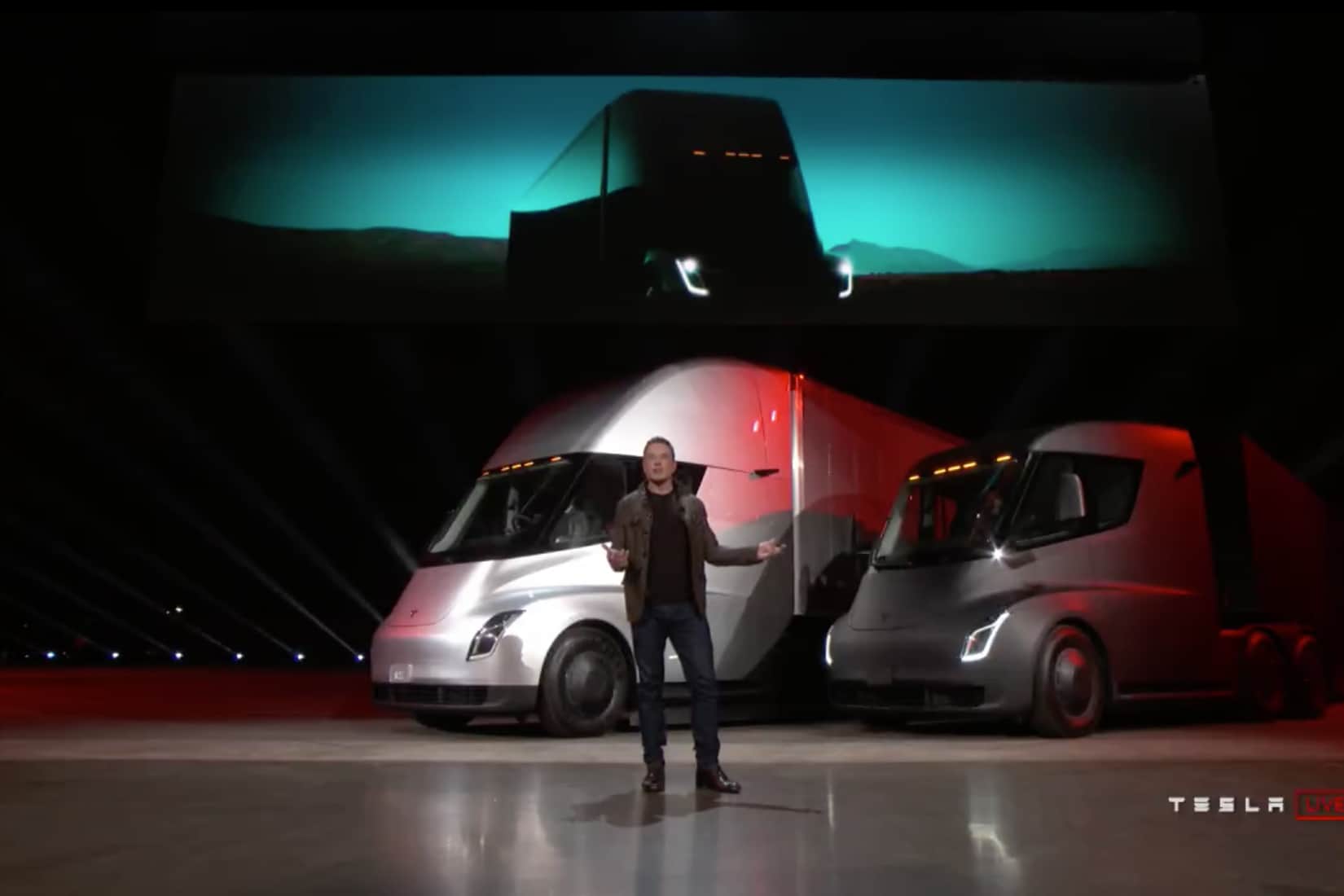
See Also: Tesla Semi: A Geo-Economic Innovation

Image: Getty/iStock