investing

Market Highlight: Artificial Intelligence

by Mike Chalmers Mike Chalmers No Comments

As artificial intelligence becomes less the stuff of science fiction novels and more a part of daily life, questions of its impact arise more and more. Investments in the technology are increasing rapidly and the trajectory for innovation and profitability is huge.

We’re no longer talking about first phase public AI like Siri and Alexa, where getting directions to the mall or adjusting your music playlists seemed cute and inventive. And we’re certainly not talking of the more egregious voice-navigated phone reception services of the past decade.

False Starts

Remember those early exchanges when you’d call a service provider like roadside assistance needing immediate help, and the interactive voice response (IVR) agent blocked you from speaking with a far more capable human?

IVR: Hello. What would you like to do today? You can visit our website at—

Frustrated Caller - SwivelBlogCustomer:I’d like to speak with a real person.

IVR: I’m sorry, I didn’t understand. Would you like sales or billing? Or would you like to learn more about our—

Customer: —Op-er-at-or! RE-AL PER-SON!

That kind of technology was hopeful in a most limited sense. It taught us what AI should not look like. It showed what intelligence wasn’t. And yet, it was only after “more than 40 years of research” that companies like AT&T could manage voice recognition of a handful of words.[1] It was highly sophisticated, but no match for humanity.

Pipe Dream or Reality?

As in several of the industries in our Ten Emerging Markets series, including virtual reality and robots, it’s important to evaluate whether AI in particular (and in conjunction, machine learning and big data) is big enough and advanced enough to sustain the kind of market growth that will fuel innovation and entrepreneurship.

While the answer may seem obvious, diligent investors should look to more objective evidence to determine where we’re at. Ever since the Jetsons, Star Trek, and just about every future-casting show presented autonomous computers and talking devices, pop culture has at least thought about what the world would eventually be like. (Readers of science fiction thought about these things even earlier).

The AI on the horizon may just be the hoped for convergence of technology and affordability. It will reduce—rather than increase—frustration.

Hardware and software over the past 20 years have improved by orders of magnitude. Machines under development no longer need to follow only very specific instruction sets. They learn and they grow. They interpret and not only respond but execute on complex tasks. We are in a different world.

Background

The dream of intelligent machines has resurfaced publicly now and again through the decades. AI enthusiasts were revived in their aspirations in 1994, when Fritz3 beat Kasparov in a single game. Wired Magazine wrote a piece in response called The Last Human Chess Master, in which experts claimed things that could have been pulled from this year’s headlines.

Software creator Larry Kaufman predicted, “We’re going through a period where one activity after another is going be transferred from the domain where humans are superior to the domain where computers are superior…. After 50 years, there’s not going to be much left in the intellectual area that computers can’t do better than people.”[2] 

“Man is in the middle of a revolution,” said Monty Newborn (ibid).

But when IBM’s Big Blue beat world champion chess master Gary Kasparov in 1997 in a six-game match, the world took note.

After the defeat of Kasparov under tournament rules in ’97, sights were set higher still. In 2011, IBM’s Watson supercomputer handily beat two Jeopardy champions simultaneously.

And, in 2014, what was seen by many as the ultimate test of artificial intelligence—the Turing Test—was passed for the first time by a computer posing as a teenage boy.  Named after World War II code-breaker Alan Turing, the test would determine if a computer could be said to “think.”

Market Highlight: AI - SwivelBlog

Originally thought to be beyond the limits of AI, Complex strategy game Go has been played in China for some 2,500 years.

In May of 2017, Google’s AlphaGo defeated champion Go player Lee Sedol of Korea. AlphaGo was originally developed by DeepMind because Go is a “googol” (1.0 × 10100) more complex than chess.[3] As such, machine mastery of Go represents a formidable step forward for artificial intelligence.

In addition to all of these specific lines of evidence for the increasing viability of artificial “thinking” and “reasoning”, there is a general sense now publicly and among experts in related industries that we are on the cusp of something significant. Something much bigger than mere games.

But one of the strongest proofs that the new AI is here to stay is a bit of an awkward fact. The reality is that the example given above of someone completely frustrated at very old voice technology demonstrates the corporate world’s obsession with cost-cutting and other efficiencies.

Companies were willing to suffer major setbacks in customer engagement in order to save on salaries and benefits of frontline phone operators, for about a decade. Is there any chance they will ignore these newer, far more capable instances of machine intelligence? Not likely.

Maturity and Opportunity

While there is plenty of speculation as to how big this emerging horizontal market will be, Reuters reported stunning news in April. “The Global Artificial Intelligence market is poised to grow at a CAGR of above 35% during the forecast period 2015 to 2022.”[4]

The biggest players the report lists include Apple, Bloomberg, Coursera, Facebook, Fingenius, General Vision, Google, IBM, Inbenta, Intel, Microsoft, Numenta, Nvidia, Qualcomm, Sentient, and Tesla.

Accenture claims it “analyzed 12 developed economies and found that AI has the potential to double their annual economic growth rates by 2035.”[5]

Big data and other fields will only be more important as time goes on because intelligent analysis of stores of information will always be a significant business (and life) problem.

This highlights the fact that several enabling technologies have created the environment necessary for AI to thrive. Accenture highlights big data and unlimited access to computing power as significant factors.

Conclusion

Experts in Artificial Intelligence and in enterprise markets have validated this phenomenon as a growth market. There are still concerns about a general business case for the technology in daily use. However, as investments ensue and the world watches autonomous vehicles and other real-world applications take hold, few doubt that AI on a level previously only dreamed about may be just around the corner.


This article is Part 3 of a series called Ten Emerging Markets as Big as the Internet. Part 1 looked at Virtual and Augmented Reality (VR & AR). Part 2 was about Robots and Robotics. Our next market highlight will take a look at Financial and Security Technologies. Stay tuned.


Resources
  1. WIRED—Happy Birthday, Hal: https://www.wired.com/1997/01/ffhal/
  2. WIRED—The Last Human Chess Master: https://www.wired.com/1995/02/chess/
  3. DeepMind—AlphaGo: https://deepmind.com/research/alphago/
  4. Reuters—Global Artificial Intelligence Market Analysis and Forecast 2022 by Size, Share and Growth Rate: http://www.reuters.com/brandfeatures/venture-capital/article?id=4999
  5. Accenture—Why Artificial Intelligence is the Future of Growth: https://www.accenture.com/lv-en/_acnmedia/PDF-33/Accenture-Why-AI-is-the-Future-of-Growth.pdf
  6. UofT—Alan Turing and the Imitation Game: http://www.psych.utoronto.ca/users/reingold/courses/ai/turing.html
  7. TED—How did supercomputer Watson beat Jeopardy champion Ken Jennings?: http://blog.ted.com/how-did-supercomputer-watson-beat-jeopardy-champion-ken-jennings-experts-discuss/
  8. The Guardian—What is the Turing test? And are we all doomed now?: https://www.theguardian.com/technology/2014/jun/09/what-is-the-alan-turing-test (includes transcript portion from the winning attempt)
  9. Washington Post—Artificial intelligence is all around us and it’s here to stay (VIDEO): https://www.washingtonpost.com/video/business/technology/artificial-intelligence-is-all-around-us-and-its-here-to-stay/2016/06/22/ca8d32b0-37eb-11e6-af02-1df55f0c77ff_video.html

Market Highlight: VR and AR

by Mike Chalmers Mike Chalmers No Comments

Real and unreal worlds are colliding. The lines are beginning to blur, and alternate realities will only come together more in the coming months and years. Is VR finally heading for economic viability? What about AR?

How Real is the Market?

For those who have watched emerging tech for long enough, engineered experiences are not a new concept. The most important advances in both VR and AR were made several decades ago. That’s because it was in the imaginations of inventors and futurists that virtual worlds were ultimately conceived.

In fact, the first virtual experiences were more than a century ago, leading some to suggest that the present market for VR is just an extension of an old fad. But there is a difference, and for leaders today the market is worth following, if not contributing to.

Background

Sir Charles Wheatstone invented the earliest predecessor to modern VR—the stereoscope—in the 19th century. Two photos presented in stereo transformed a 2D picture into a 3D immersive experience.

Stereocard Used in a Stereoscope - SwivelBlog

Image: Underwood & Underwood (Library of Congress). A woman uses a stereograph at home.

Queen Victoria was so enamored by the device that its popularity surged:

By 1856, more than half a million viewers had been sold and the vogue spread to America. A new type of device known as the Holmes stereopticon or the American stereoscope was promptly invented by Oliver Wendell Holmes, an open viewer utilising natural light, which would go on to dominate the market between around 1880-1940.”[1]

The Economist notes that VR concepts have fueled “science fiction’s novels and movies since the 1950s.” In the 1960s M. L. Heilig patented devices including a head-mounted stereophonic (audio) unit and a multisensory VR system for a more immersive cinematic experience.[2]

More recently in the 1990s VR had a sort of false coming of age that never fully culminated in the revolution it promised. In 1996 at the fifth World Wide Web Conference in Paris, VRML (virtual reality markup/modeling language) was among the “hot new technologies,” promising 3D worlds online.[3] It became an ISO standard by 1998 when “Both major browsers, Netscape Navigator and Microsoft Internet Explorer” boasted support for the technology.[4]

Shortly afterward the protocol died.

From this brief look back, it might appear that VR is a fad, albeit persistent. And such skepticism would be warranted only if investors ignore the major differences between the past and the present state of (a) the technology, (b) the experience, and (c) the commercial opportunities now available.

Then and Now

What we learned in the 90s was that the technology was not nearly as impressive as the hype. Gaming consoles like Sega’s VR system induced motion sickness. Poor graphics combined with process latency to cause what one scientist labeled the “barfogenic zone.”[5] 

Effectively, you would turn your head, but the lag between your vision and multi-sensory perception created dizziness and nausea. Disorientation turns out to be a bad thing when exploring new worlds.

Today, the gear and platforms available have answered just about every challenge previously faced. In March 2014, the BBC announced that “Oculus has made great strides in reducing – perhaps even eliminating – the motion-sickness problem.” That’s right when Facebook paid $2 billion for the company (in fact, $3 billion with compensation packages).

Even those reporting small latency issues declare that the capabilities are “so close we can taste it.” Legit VR is emerging.

Virtual Reality and Augmented Reality

There are two branches of the technology—VR and AR. But in reality there is too much overlapping R&D and investment to completely bifurcate them.

VR

That said, it’s helpful to think of the differences according to use cases. For example, pure VR is popular for total immersion, where the user [typically] remains in one place. Gaming, entertainment, and fully immersive tours and conferencing are examples. Before leaving office, Barack and Michelle Obama gave a virtual tour of the White House via multiple VR technologies.

Commercial and Air Force pilots have been trained on flight simulators for decades, and other industries with high barriers to entry have similarly utilized VR. So we know the technology can be applied in ways that provide measurable benefits. While much of the focus recently has been about fun and games, the potential for VR to be useful in business is real. With technological advances, cost reductions, and economies of scale, the outlook is promising.

AR

For AR, the user can interact out in the real world with technological assistance. Something as simple as heads-up displays for vehicle navigation are an example of AR. So too glasses that augment human capabilities with facial recognition and translation services. Soon, user guides will be overlaid onto complex DIY projects.

Imagine wearing Google Glass and assembling an IKEA kitchen step-by-step, as the company directs your every action. Or arriving on the scene of an accident, calling 9-1-1 and having the operator guide you through CPR visually. The possibilities are extensive.

Maturity and Opportunity

To quote The Street, VR is “still in the nascent stage,” yet Facebook, Samsung, Sony, HTC and others are heavily invested. With revenues of over $2 billion in 2016, some expect that number to scale more than 10 times by 2020.

Last year, Recode pointed out that Facebook’s acquisition of Oculus transformed the investor landscape, as as “the number of venture capital deals and total dollars invested” in VR and AR technology had tripled.

Vertical Markets

The markets being disrupted by this technology are already numerous, but there are almost limitless ways in which innovations may be introduced. For now, expect to see continued changes in the following:

  •    Gaming
  •    Real Estate
  •    Tourism
  •    Medtech  (#5 on our list of Ten Emerging Horizontal Markets)
  •    Education
  •    Film and Entertainment
  •    Business Conferencing
  •    Engineering
  •    Fitness and Athletics
  •    Corporate Training
  •    …many more

Conclusion

Virtual worlds and augmented landscapes appear to be here to stay. Prudent investors may look at a potential 10 times growth target over the next few years and reduce it somewhat in predictive modeling. But even a significantly more modest assessment remains promising.

Could the phenomenon go away? It’s possible. Could it be unprofitable for many? Yes. It’s more likely however that just as the video phone was a failure for nearly a century before becoming part of our everyday arsenal of tools (thanks to Skype, FaceTime, Zoom, etc.), at some point, a sufficient form of the technology emerges. At that point, after enough optimism over its perceived benefits, ordinary people are ready to give it a try.

This article is Part 1 of a series called Ten Emerging Markets as Big as the Internet. Our next market highlight will take a look at robots and robotics. Stay tuned.


References

[1] Victoria and Albert Museum – Stereographs: http://www.vam.ac.uk/blog/factory-presents/stereographs
[2] MIT Timeline of Wearable Devices: https://www.media.mit.edu/wearables/lizzy/timeline.html
[3] Wired: Fifth International World Wide Web Conference – Paris https://www.wired.com/1996/04/junkets-41/
[4] Wired: VRML Becomes ISO Standard: https://www.wired.com/1998/01/vrml-becomes-iso-standard/
[5] BBC: How Virtual Reality Overcame Its ‘Puke Problem’: http://www.bbc.com/future/story/20140327-virtual-realitys-puke-problem
[6] Université du Québec en Outaouais – Definition of Cybersickness: http://w3.uqo.ca/cyberpsy/en/cyberma_en.htm.
“Cybersickness is believed to occur primarily as a result of conflicts between three sensory systems: visual, vestibular and proprioceptive. Accordingly, the eyes perceive a movement that is out of sync by a few milliseconds with what is perceived by the vestibular system, whereas the remainder of the body remains almost motionless (Stanney, Kennedy, & Kingdon, 2002). Cybersickness can also be caused by factors related to the use of virtual reality equipment (e.g. heaviness of the helmet, closeness of screen to the eyes). Lawson, Graeber, Mead and Muth (2002) note the added possibility that these side effects are also connected to Sopite Syndrome (fatigue due to the movements).”

Visionary Companies Boost Loyalty and Morale

by Mike Chalmers Mike Chalmers No Comments

With all the customer service woes tearing through industries over the past year—from airliners to wireless providers—companies would do well to revisit a concept first published in 1994 by Harvard Business Review as “The Service-Profit Chain.” 

Research by James Heskett and team shows that it isn’t merely good PR to excel at serving customers. It’s good business too. Further, profitability isn’t only achieved by focusing on end users. Engaged employees also contribute to positive customer relationships.

Links in the Chain Illustrated

The Service-Profit Chain emphasizes the value of people—both inside and outside of the organization.

Service Profit Chain @SwivelBlog from HBR

Image: © Harvard Business Review

The authors present the major links in the chain (above). Internal service quality is the first link, impacting employee satisfaction.

Next, employee retention and productivity link to service value. Customer satisfaction results from these.

Penultimate in the chain, customer loyalty (recurring business) ultimately drives revenue growth and profitability.

The Real Value in the Chain

Heskett and team note:

Customers often become more profitable over time. And loyal customers account for an unusually high proportion of the sales and profit growth of successful service providers. In some organizations, loyalty is measured in terms of whether or not a customer is on the company rolls. But several companies have found that their most loyal customers—the top 20% of total customers—not only provide all the profit but also cover losses incurred in dealing with less loyal customers.

Key to this discussion (and why you should care), companies that focus attention on the needs of the service-profit chain can realize increases in profit of 25-85 percent.

How will you improve your service-profit chain?

Further Resources

Read HBR’s “Putting the Service-Profit Chain to Work”: https://hbr.org/2008/07/putting-the-service-profit-chain-to-work

Read our article “Tesla’s Value Proposition is a Lesson for the Airlines”: http://new.swivel.net/2017/04/20/teslas-value-proposition-lesson-for-airlines/

Featured image: Getty/iStock

Tesla’s Value Proposition is a Lesson for the Airlines

by Mike Chalmers Mike Chalmers 1 Comment

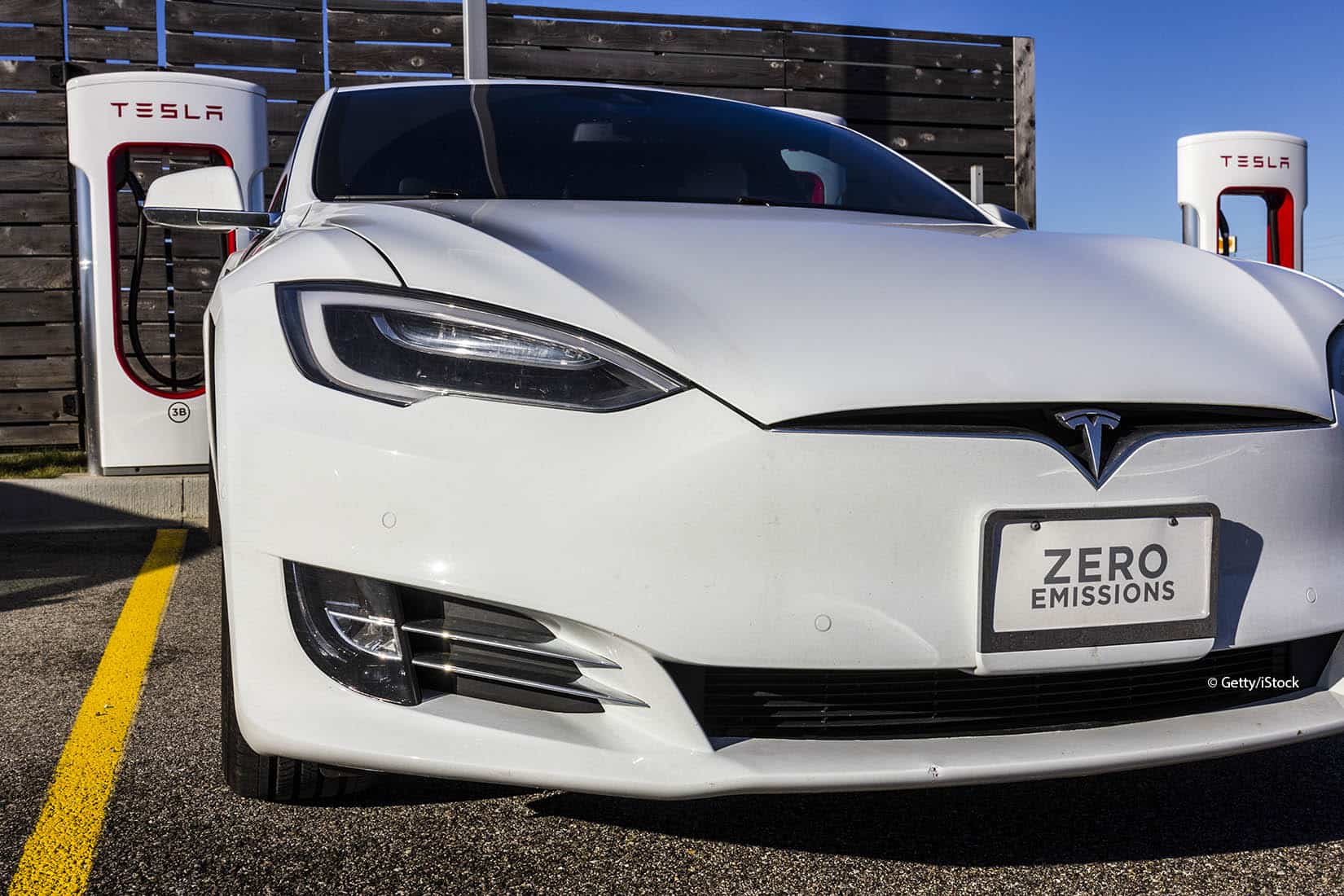
Last week, investment analysts were dumbfounded over Tesla’s surge past Ford and GM, to become America’s most valuable automaker. They say it makes no sense. It’s inexplicable. They point out that there is nothing warranting the present valuation. They warn of no future scenario under which the present value is legitimated.

Meanwhile, United Airlines continues to reel over its recent customer service scandal. A doctor was bumped from his flight because of the airline industry’s practice of “overbooking”—something anyone who’s flown in the last decade knows something about. This particular passenger refused to heed the flight crew’s instructions and was forcibly removed by O’Hare Airport Police.

These may be two separate incidents and in different industries, but make no mistake—they are parallel stories with inversely proportioned gains and losses. After all, in a matter of days, United quickly lost $1.4 billion in value and Tesla at least briefly shot up to $1.7 billion more than GM. Both exchanged gains for value propositions, expressed or implied, and in both cases, public perception is a significant factor.

Investors believe something about Tesla that they don’t believe about United. Savvy buyers know the world is clamoring to support businesses that promise positive experiences that genuinely put the customer first. Even the perception that businesses are customer-unaware affects market share.

Before getting to the heart of the story, it’s important to make an important distinction—between a highly debated airline practice (overbooking) and a legitimate one (removing obstinate passengers).

Refusing to follow orders of flight crews is foolish in the extreme, and at times punishable with prison time. In a post-9/11 world where terrorist threats are real and all too frequent, it’s best to consider flying as categorically different from other consumer services. It’s also true that bumping passengers is legal.

Still, customers have every right to vote with their dollars, shopping (or flying) with someone else if unimpressed with service levels.

While social media is making much of how loathsome United is as an airline, dragging up old and new stories of passenger woes, the initial sympathy for the bucked passenger—even prior to knowing all the facts—is instructive for the industry as a whole. This could have happened to any airliner.

Airlines can refuse service, but customers who perceive that someone has been removed for a reason that’s worse than the passenger’s infraction (like overbooking for maximum profit) will at times side with even unsavory recipients of poor treatment.

The airline industry as a whole will have to re-evaluate procedures like overbooking as an accepted business practice. Other industries should take notice and understand the dynamics of customer perception and poor practice converging.

So, what is Tesla’s proposition that seems to be driving its own market value sky-high? To read its website one finds only very marketed propositions. For example, at tesla.com the subtitle is “Premium Electric Sedans and SUVs”—its primary offerings. Tesla’s energy division promises, “Sustainably Power your Home or Business.” Both sound relatively mundane.

But anyone who’s followed Tesla even a little over the past few years knows that Tesla’s value proposition includes completely reinventing the relationship between the customer and the product. Forbes reported in 2015 that the company “busted the test curve”, receiving a perfect 100 from Consumer Reports for the P85D.

Even when receiving criticism from Consumer Reports in 2016 for technical issues with the Model X, there was recognition that the reason for the glitches was that Tesla was reaching for the moon, going for more and greater innovations for its customers.

With Elon Musk, adroit in FinTech, aerospace, ground transportation, power generation and energy distribution, there is a believability factor with Tesla’s audacious goals that isn’t present with the airline industry’s more modest outlook (and less than stunning customer satisfaction norms).

In 2010 Tesla was “the first American automaker to go public since Ford in 1956” and it did so on NASDAQ (home to Apple, Microsoft, Oracle, and Cisco—leading tech companies rather than automakers). Tesla is not without issues, and its present value can be debated on good grounds. But the company has amply demonstrated the difference between what customers used to put up with and what they want to see today.

Customers are looking for changes to the way companies operate and are willing to put up with occasional failures when firms miss the mark as a result of trying to achieve better results for those they serve.

See Also: Tesla Semi: A Geo-Economic Innovation

Image: Getty/iStock

How to Find a Great Domain

by Mike Chalmers Mike Chalmers No Comments

Entrepreneurs know the importance of choosing a good business name, but that doesn’t make the process any easier. Even when you do come up with that zinger of a moniker, chances are someone has already snatched up the associated domain name, right?

Well, maybe not. With a proper strategy the process will be more enjoyable than frustrating. Many of the ingenious domain names you think of will already be taken, to be sure. However, I’ve often found domain names for customers that are easy to remember and unused by other businesses. You can have good success and greatly benefit your business if you work at it.

Remember these points to find a great domain name:

1) Research, research, research.

You may already have great ideas, but your great ideas without due-diligence could be second-best compared to your competition. List the 10 brands and names in your industry that you admire most. Don’t just concern yourself with the biggest or most profitable. You’re the one who needs to be passionate about your brand so you’ll want to compare your ideas to your most respected competitors.

2) Search Creatively and with Purpose.

Be creative and begin your domain name search. Don’t be discouraged if your initial choices are already registered to someone else. That’s common. The trick is to search every possible iteration of your name, looking for key words and combinations of terms.

3) Don’t buy on impulse.

If you find a domain you like, ask yourself why nobody has registered that name. It certainly could be because you were the first to think of it, or it could be that the name is not a very good one. Make a list of all available domain names as you search. Once you’ve built a list of numerous available names, select your candidates, registering only the very best of the bunch. Your favorites should be comparable to the names on your respected competitor list.

4) Enjoy the process!

This is not a school project. This is for your business success. Domain name buying can be a great adventure in itself. The bottom line however, is that the value of a domain name in most cases will be the value you assign to it as an address or name for your business. If you find domain names you believe are going to be useful in the long-term for your needs, that is the single most important determiner at the time of purchase. Don’t buy domain names you cannot use or reasonably sell in the future, but enjoy the search as you look for those untapped gems.

The main requirement for acquiring great domains is a lot of creativity with an even greater measure of patience.


Now you can search more intelligently with Swivel Domain Search.

Read More

Ask Away

by Mike Chalmers Mike Chalmers No Comments

New this year, Swivel is taking your questions for the blog. Do you have an idea you’re trying to get off the ground? Have a customer problem you’re trying to solve? Drop us an email and let us know your challenge.

Get In Touch

While we can’t write on every inquiry, if your problem is applicable enough to a broad audience we’ll consider it for upcoming articles. Send us your entrepreneurial challenges, requests for innovative solutions, and new problems arising due to the changes in your market. When we choose a question, the research and response is provided at no cost. We’re keen to receive your input as it helps us learn what our customers and followers are grappling with.

Enjoy the journey with us as we seek out new ways to beat the odds and grow better companies. Ask away!

Innovation and Reason in The Outsourcing Decision

by Mike Chalmers Mike Chalmers No Comments

In The Outsourcing Decision,1 author Ralph E. Drtina demonstrates that in a globally competitive economy the prospect of outsourcing is increasingly relevant in management accounting. He also suggests that there are deficiencies in how most accounting professionals and academics evaluate the opportunity cost of hiring an external firm to acquire internally controlled activities. 

Rather than leave us with a broad critique of existing methods, Drtina recommends a straightforward methodology by which managers can make better decisions.

Evaluating Options

Drtina presents an example where maintenance for the delivery fleet of a manufacturing company is considered for outsourcing. Initially, he suggests a firm must determine the importance of controls for the service, especially when considering confidential documents or proprietary technology, and whether the firm considering outsourcing can deliver the service to the highest standards in-house.

On the latter point, Drtina adds, “A determination must be made whether the firm can achieve a world-class level of delivery. If it is not possible to accomplish benchmarked standards of performance, the activity should be outsourced. To reiterate, the firm should concentrate only on those core activities that enhance its unique marketplace advantages.”

Long-term Planning

Ultimately he contrasts two cost analyses and shows the need for additional accounting information to assist decision-makers. In the first example (see Panel 1, below) Drtina presents a typical five-year planning sheet to determine a straightforward differential cost to outsourcing.

He does this by subtracting the net cost of servicing vehicles in-house by the net cost of outsourcing vehicle maintenance.  The number of vehicles increases by 25 per year and training increases accordingly over time by growth estimates. In year 1, the differential cost to outsource is seen as $7,920 in favour of outsourcing.

As is seen in the table however, efficiencies in operations in-house begin to emerge by year 4 and the differential cost to outsource shifts with it resulting in a negative figure by year 4 of -$6,270 and by year 5, the cumulative differential over the period is -$3,960.

By estimates using this method, the clear decision would be to maintain the fleet maintenance service internally.

Innovation

Not satisfied with this approach, Drtina decides to apply a figure, which takes into consideration the time value of invested capital (see Panel 2, below). Drtina discounts the cash flows by 16% and finds that the net present value for the 5 years is in fact positive, at $1,101 (see also Panel 3, below).

At the end of the day it is likely more useful to apply his methodology, however, decision-makers at all levels may need support and education to see the value in what he proposes. Management accounting as a discipline is extremely important, and yet, not for the faint-of-heart.

Summary of the Outsourcing Decision SwivelBlog
Panels 1-3: Based on Drtina’s work in “The Outsourcing Decision”

Conclusions

Drtina appears to be influenced by his own philosophy around outsourcing and not strictly by his numbers. For example, he says, “Before making a final decision… management must consider the less tangible, more uncertain benefits… These qualitative factors may prove significant and may take precedence over results favored in the discounted cash-flow analysis.”

This does not suggest that he has misunderstood the influence or lack of influence in his accounting innovation. Rather, it shows that the forward-thinking managerial accountant must take into consideration more than the short-term data we have on hand, and certainly more than quantitative data alone.

[1] Ralph E. Drtina. (1994). The Outsourcing Decision. Management Accounting, 56-62. McGraw-Hill Education.

Financial Innovation Through Inventory Driven Costs

by Mike Chalmers Mike Chalmers No Comments

The study Inventory Driven Costs by Harvard Business Review was written a few years after Hewlett-Packard fundamentally transformed its supply-chain logistics, based on accounting data it was previously incapable of tracking.[1]

Writing Team

HP insiders, Gianpaolo Callioni, Xavier de Montgros and Linda Wright along with Insead faculty Regine Slagmulder and Luk Van Wassenhove, show how effective implementation of timely and relevant accounting metrics has lead to successful profit management by the PC maker.  The team’s expertise is in operations (supply chain directors Callioni and Montgros at HP, and Van Wassenhove, professor of operations at Insead), and accounting and performance metrics (finance manager Wright of HP’s Personal Systems Group, and Slagmulder, management accounting and performance expert at Insead).

At Issue

The article details problems Hewlett-Packard was having with its PC business.  No small concern, the article informs that, “by 1997, margins on its PCs were as thin as a silicon wafer, and some product lines had not turned a profit since 1993.” The commoditization of the PC industry was affecting all manufacturers, but HP sought opportunity to gain advantage over its competitors.

Key findings of HP’s Strategic Planning and Modeling (SPaM) group led to the company’s supply chain transformation, division by division. SPaM initially found that the nonalignment of supply and demand for the entire PC business was to blame for surplus inventory. Executives were insufficiently informed by antiquated management-accounting metrics, which “had failed to keep pace with the evolution of its supply chains.”

Inventory Driven Costs Breakdown

SPaM parsed at least five inventory-driven costs (IDC), four of which had not appeared on radar before as significant. Holding Cost was named as the most obvious, but one less significant in scope than the others.  The four previously evading detection were:

1. Component Devaluation

First and foremost, Callioni and team show that devaluation was responsible for the largest portion of overall inventory costs.  Decreases in component prices from suppliers, while inventories were high, meant that HP was eating losses.

2. Price Protection

Due to the nature of the PC business’ rapidly declining costs on items such as CPUs and RAM, HP was forced to reimburse channel partners holding stocks that had not sold. The article elaborates, “A channel partner might buy a product from HP when the prevailing market price was $1,000. But if the item sold five weeks later at a new price of $950, HP had to reimburse the $50 difference.”

3. Product Returns

Similar to price protection costs, product returns were entire reimbursements by HP of its distributors on products they were unable to sell.

4. Obsolescence

Incredibly short lifecycles for PC products meant that in cases where demand and supply were poorly aligned, HP was forced to multiply write-offs.

Evaluation

When elements of inventory costs were taken together, it was difficult to know where to focus attention.  In the article, the authors provide examples of the clear picture that emerges once costs are separated out.  When three products are evaluated side by side (See Table 1), “the highest costs for product A are coming from goods whose prices have dropped after they’ve been shipped to retailers.  But the greatest problem for products B and C are drops in component prices before the products ever get out of the factory.”

Table1: Inventory-Driven Costs (IDC)

Analysis

With this new information, SPaM was able to work with HP business units, starting with the Mobile Computing Division (MCD).  Former accounting metrics were exchanged for measurements operating on a more granular level of detail. MCD eventually opted to centralize manufacturing and configuration at a single location based on an opportunity comparison using the new metrics (See Table 2).  The success of the initiative was so far reaching that the program was eventually standardized, and adopted enterprise-wide.

Table2: Inventory-Driven Costs (IDC)

SPaM made known their findings about the true drivers of HP’s inventory costs in 1997.  In 1998, after implementation, margins were already increasing for MCD. By 1999, the unit returned to profitability.  In May of 2002, HP and Compaq merged and the new metrics were maintained.

Focusing on RONA

According to Inventory-Driven Costs, HP has catapulted forward through its shift in focus from a strategy of return on sales, to return on net assets (RONA), a change supported by new accounting metrics.

Applicability Beyond HP

Though the article focuses on HP, aspects of the full scope of changes acted upon by the company mirror that of others in the industry. Dell’s success through the 90’s, for example, was due in part to a strategy of minimizing the steps in its supply chain and managing the variability of supply and demand[2]. Dell has utilized return on invested capital (ROIC), which similarly focuses on “high returns at very low asset intensity.”

While Inventory-Driven Costs points to IDC metrics as the catalyst for HP’s change, it’s possible to arrive at the general conclusions of management by other means. In fact, the authors concede, “Product group managers may well have known before, on an intuitive level, what they needed to do, but the IDC metrics have made it easier for them to convince senior managers that their particular situations require particular solutions.”[1]

Management Culture

In light of this, another factor emerges—that of managerial culture and decision-making. In an organization such as HP, where management decisions are evidently more closely linked to accounting metrics, the inventory-driven cost method goes a long way to ensuring management objectives are carried out. This is especially true if managers are not otherwise empowered to make decisions based on what they know to be true. IDC has contributed to that empowerment, where previously a manager might have been reprimanded, even for making the right decision.

Carly Fiorina

When Carly Fiorina was installed as CEO, she sought to bring about major change to HP culture.  Prior to HP’s acquisition of Compaq, she was convinced that dramatic improvements were still needed.  “Only a major acquisition, she concluded, could disrupt entrenched routines and catapult HP into a commanding lead in the personal computer industry.”[3]  Indeed signs of successful changes at all levels continued with the merger. Susan Bowick, of the management team formed to lead the company’s integration of people, said of the experience, “To my knowledge, no global company of HP’s size had ever integrated their organization, all HR practices and HR technology in less than 12 months. Many of us felt that it was one of the best projects and best teamwork examples of our career.”[4]

Exceptional Discipline

When speaking of the conditions for success at Dell, Thomas Stewart and Louise O’Brien wrote that “High expectations and disciplined, consistent execution are embedded in the company’s DNA.  Dell is more than an efficient factory—it’s an organization that can turn on a dime and that has demonstrated impeccable timing in entering new markets.”[2]

A Model for Other Companies

In addition to accounting efficiencies, any company must work to develop teamwork, management instinct and adaptability. It’s important to note the many changes leading to HP’s leadership in the PC business, of which a very critical element has been IDC. Providing managers with latitude along with the right tools to enact change is imperative.

In times of economic instability or recession, the IDC method, in the right management conditions, gives business units a lever to persuade senior managers of required changes, even dramatic supply chain restructurings like HP’s. Such adaptive strategies would hardly find favor in a poor climate based on intuition alone.

HP has won the battle to manage profits and inventory in several circumstances, but there have been challenges. In the first quarter of 2009, the company announced its profits would decline as much as 5% from the previous year.[5] It will surely maintain its metrics and closely monitor results, ensuring that excess costs are avoided. Any organization evaluating inventory-driven costs however, would do well to contextualize HP’s success and recognize the compound drivers of effective decision-making.

Cause and Effect

Lastly, it is important to remember what the authors point to almost from the outset. That “Mismatches between demand and supply” are the cause and surplus inventory, the effect.[1]

As long as IDC metrics are focused on decreasing that elasticity, it should continue to be effective. Overall, Inventory-Driven Costs is an impressive look at one very helpful tool for the 21st century manager of any “highly price-competitive industry.”[ibid]


Resources

1. Callioni, G., de Montgros, X., Slagmulder, R., Van Wassenhove, L. N., Wright, L. (2005, March). “Inventory-Driven Costs.” Harvard Business Review.

2. Stewart, T. A., O’brien, L. (2005, March). “Execution Without Excuses.” Harvard Business Review.

3. Nadler, D. (2007). “The CEO’s Second Act.” Harvard Business Review.

4. Pomeroy, A. (2005, June). “Orchestrating a Mega-Merger.” HRMagazine, 50(6), 58-59.

5. Vance, A. (2009, February 19). “Hewlett-Packard Will Cut 24,600 Jobs.” New York Times, p. 5.

6. Byrnes, J. (2003). “Dell Manages Profitability, Not Inventory.” Harvard Business School Working Knowledge.


Michael Dell in Vancouver

by Mike Chalmers Mike Chalmers No Comments

FLASHBACK: March 31st, 2003—As the war on Iraq entered its third week, with business people everywhere watchful of the effects the mid-east conflict will create economically, chairman and CEO of Dell Computer Corporation, Michael Dell delivered an encouraging address to the Vancouver Board of Trade.

In what was essentially a lesson in the history of the company, Dell used his experience in overcoming difficulties and meeting customer needs to present a clear path to enterprise success. He noted that five out of the top ten companies in North America were founded during economic downturns. Dell started in 1984 with $1,000 and now has revenues of about $35 billion.

Dell pointed to three key factors in his company’s (and any company’s) success:

  1. Operational efficiencies: Passing savings on to customers
  2. Relevant high-value products & services: Customers determine direction
  3. Expanding into new geographies: Unmet areas
  4. Operating costs for Dell Computer are roughly 10%. Dell spelled that out by explaining that for a $1000 computer, the company spends about $100 in design and manufacturing costs, as compared to competitors IBM (22.8%) and HP (22.5%), whose operating costs are magnifying as Dell’s subside. He attributed his competitors’ growing operational expenses as a problem of revenues receding faster than costs are dropping.

Dell spoke of the nature of the company’s e-commerce model and informed that it is not based on a push system whereby a product is created, warehoused, then sold, but rather, is based on a pull system. A product is sold; the suppliers are contacted; the system is built; then delivered. At this juncture the company has about ninety hours of inventory. “And it all runs on Dell servers,” he quipped. “Dell’s model virtually integrates customers and suppliers.”

Dell Computer now operates the largest e-commerce engine in the world, with more online revenues than Hilton Hotels, Amazon.com, and Starbucks combined. Typical orders are built and delivered in 3-5 days. The company owns completely its entire supply chain, which Dell said attributes to a 6% cost advantage over outsourcing.

“Operational efficiency drives customer satisfaction”. Dell displayed graphs showing that the company has lead in price/performance, and cost of ownership satisfaction for many years.

Delving into current areas of interest, Dell spoke of emerging trends toward wireless communication, and hailed Linux as “the new UNIX”. He noted that his company now supports 802.11 wireless, and ships more Windows and Linux systems than any other system manufacturer. He also spoke of a shift in the direction of “high performance clusters” rather than the pricey supercomputers of the past.

To illustrate that the company’s business model works in any economy, Dell pointed to recent growth statistics such as those of sales in China (72% growth last year) and Germany (46%) among others.

The event was held at the Sheraton Vancouver Wall Centre.